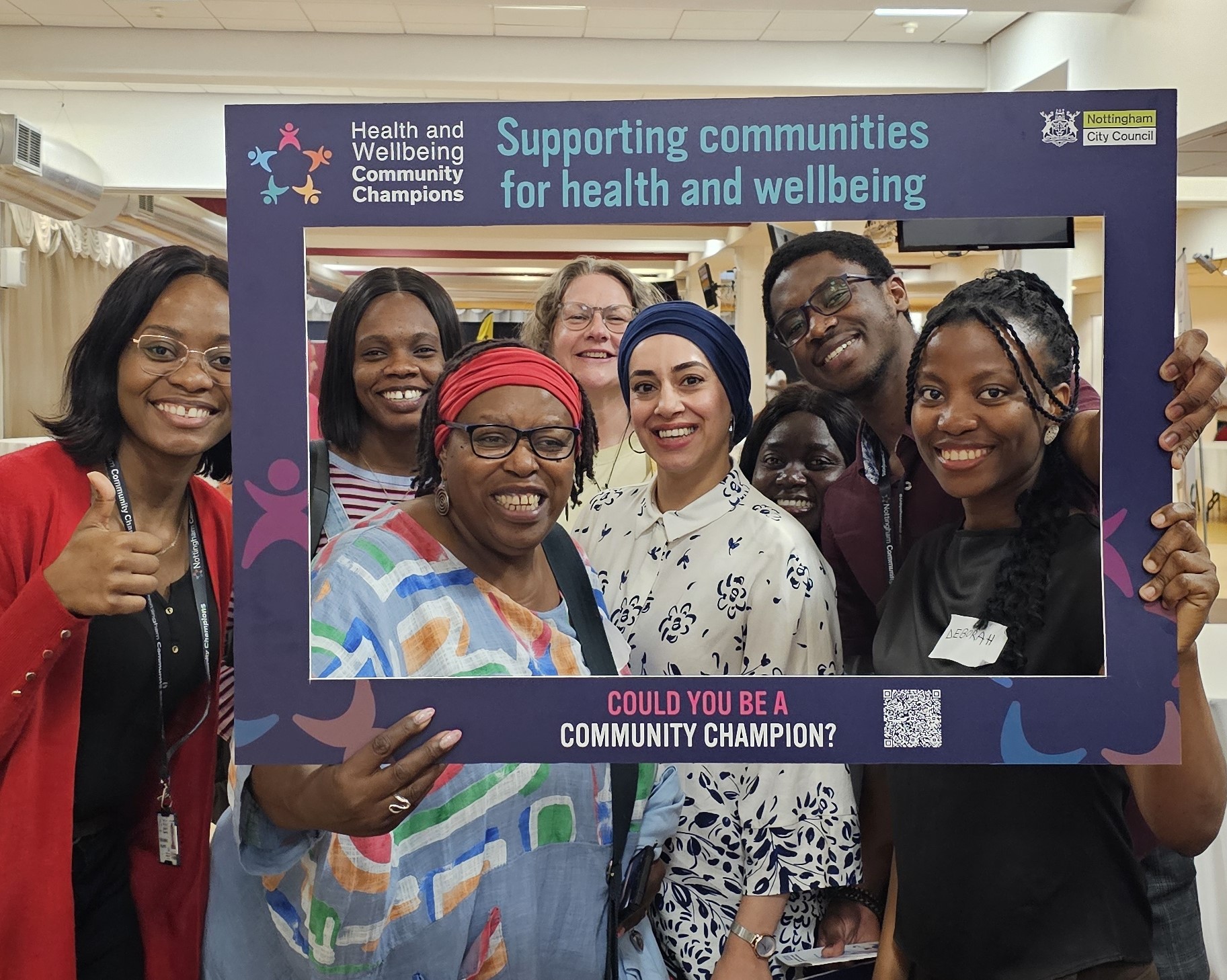
“There are organisations with a wealth of experience, connections, and relationships that we can always share.”
Diversify Education
Neighbourhood working is not simply a delivery method; it is a long-term commitment to fairness, resilience and a more sustainable health and care system for Nottingham.
Key enablers
Trust
- Working alongside local faith leaders, community centre staff and other well established organisations, builds early connections with the neighbourhood
- Using trusted community spaces helpes create a sense of belonging and offers a more welcoming environment
- Being visible strengthens trust and acceptance both within the neighbourhood and among partner organisations, for example attendance at community events or conferences
- Visibility of the service in use has the added benefit of normalising participation, enabling access and encouraging service use
Collaboration
- Pooling resources enables efficiency savings, greater reach and improved productivity
- Sharing knowledge or creating training opportunities for partners supports the development of individual services while also enhancing the system
- Flexibility gained through collaboration helps maintain continuity of services during periods of policy change or organisational restructuring
- Co-producing services with the community strengthens trust and empowers residents to take an active role in shaping their own health and wellbeing.
- Collecting feedback from the community supports service evaluation and improvement.
- Issues relating to policy consistency, organisational alignment and resource availability can be eased through stronger collaboration across organisations
Training
- Training, particularly in cultural sensitivity, effective engagement and building trust with service users, was recognised as an essential component in supporting successful integration.
- Increasing the versatility of staff and enabling volunteers to take on more active roles helped build organisational confidence and supported the wider success of neighbourhood approaches.